
MONETIZATION 4 MIN READ
Subscription paywall timing: when has the product earned the ask?
There is no universally correct screen for a paywall. The right moment depends on what the user understands, what value they have experienced, what they want next and the economics of delivering that value.
 AnnaFounder, Asol DesignPublished
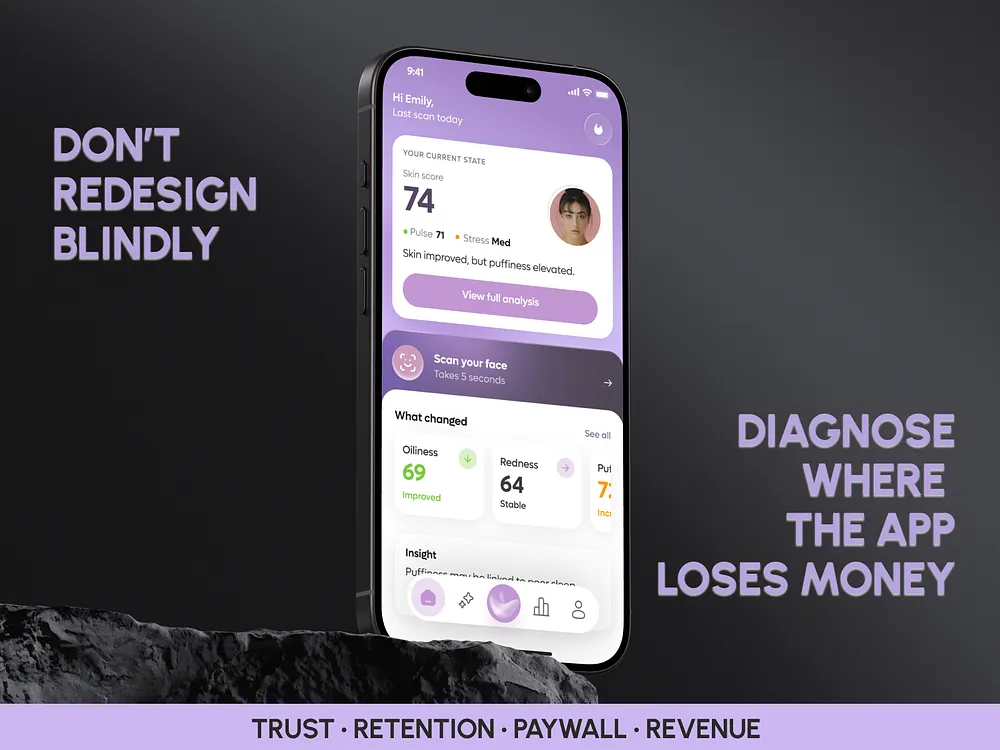
Locate the gap between the promise and the paid decision
A weak subscription conversion rate can come from several different problems. People may not understand the offer, may not trust the product yet or may understand it perfectly and decide it is not worth paying for. Moving the same paywall does not solve all three.
My post on horoscope app monetization raised the timing question: what has the user experienced before the product asks for commitment? Apply that question to your own business without assuming the same answer will fit every category.
Map the acquisition promise, setup, first useful result and paid capability. Ask users to explain what changes if they subscribe. If the answer is unclear, improve the value explanation before adding urgency or testing another button label.
Compare timing options against the business model
An upfront paywall can make sense when intent is strong and the paid experience is clear. A limited preview can help when value is hard to describe. A feature boundary can be appropriate when free use is useful and the paid capability has a distinct purpose.
| Moment | Question before testing |
|---|---|
| Before use | Can the user assess the offer without trying it? |
| After a useful preview | Does the preview demonstrate the paid value accurately? |
| At a capability limit | Is the boundary understandable and consistent? |
Account for delivery cost. A computationally expensive product may need a bounded sample rather than unlimited free use. Define the limit clearly and preserve work when the limit is reached. A surprise charge or lost progress damages trust.
Design the entire paid decision
The paywall should explain the capability, the billing period and the commitment in readable language. A user comparing plans should be able to understand the total charge and what happens after any trial without decoding small print.
Consider the return path as well as the purchase path. What happens if someone closes the paywall, cannot complete payment or already has an entitlement? Give each state an intentional response. Avoid repeatedly reopening the same prompt when the person has chosen to continue with the available experience.
Use a prototype task to ask what a participant believes they are buying and when they expect to pay. This can reveal misunderstanding before a live experiment makes it expensive.
Measure revenue quality alongside conversion
A higher trial start rate is only one part of the subscription journey. Track paid conversion at a consistent window, renewal or retained paid use, refunds and support contacts about billing. Where possible, review contribution after variable delivery costs.
Keep denominators explicit. Conversion per paywall viewer answers a different question from conversion per eligible new user. A later paywall may be seen by fewer, more committed users, raising the first ratio while reducing the number of subscribers overall.
Segment by acquisition intent and customer experience. Existing users reaching a new feature boundary are not equivalent to first-time visitors from a broad campaign. A blended result can hide the reason one group responds differently.
Test a decision, not a universal rule
Write the proposed mechanism before the experiment: a relevant preview will make the paid capability easier to assess, so more eligible users will become satisfied paying customers. Define what evidence would challenge that mechanism.
Start with the smallest change that tests it. If timing, price, plan structure and visual design all change together, treat the release as a combined offer experiment. Do not attribute the outcome to timing alone.
For earlier friction, review mobile app onboarding and the first useful result. For the experiment itself, use the principles in mobile app UI A/B testing. Asol’s paywall design work connects these decisions to the broader product journey.