
PRODUCT STRATEGY 4 MIN READ
500+ launches. The advantage is knowing what to question.
Experience becomes useful when it changes the questions you ask, not when it supplies a template for every app. Across 500+ launches, the recurring work is recognizing a possible constraint and checking whether the pattern actually fits.
 AnnaFounder, Asol DesignPublished
The number matters because the contexts differ
Across my independent work and Asol Design, our record includes 500+ launched mobile apps: 300+ from my independent work and another 200+ through the studio. In that count, work that never reached launch does not belong.
What changes with experience is exposure to different combinations: founders, audiences, business models, acquisition promises, product stages and monetization systems. A solution that works in one combination may fail in another.
My background in development, product management, design and startup leadership helps connect those decisions. The useful advantage is not an ability to skip discovery. It is knowing which assumptions deserve attention sooner and recognizing when an apparently familiar problem has a different cause.
Pattern one: value arrives too late
Teams often ask how to shorten onboarding when the deeper issue is the distance between the acquisition promise and the first useful result. Removing screens may help, but only if those screens are the obstacle.
Inspect what users expected, what work the app asks them to do and what they receive afterward. A personalized recommendation that arrives quickly can still feel irrelevant. A longer setup can feel worthwhile if every input clearly improves a result the person cares about.
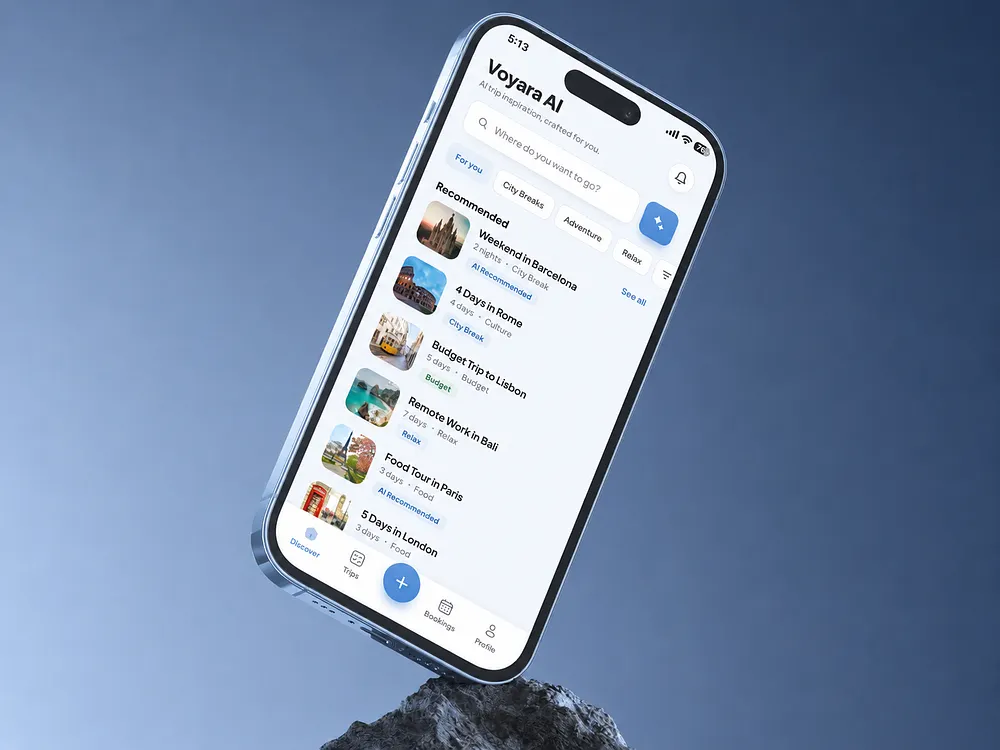
For an illustrative travel app, choosing preferences is not yet the promised value. A realistic trip suggestion that fits someone’s constraints may be. Test whether users recognize that fit before optimizing the number of setup steps. The transferable pattern is delayed value; the solution depends on the job.
Pattern two: monetization conflicts with behavior
A weak paywall may be downstream of an unclear product promise. It may also offer the wrong paid benefit, interrupt the wrong moment or ask for a commitment that does not match how the product is used.
Map the natural frequency of the user’s need alongside the subscription offer. A recurring membership needs an ongoing reason to exist. An occasional high-value task may require a different package or a clearly explained continuing benefit.
Review behavior before the paywall and after purchase. People may convert because of a compelling promise and cancel because the product never delivers it. A useful pattern directs attention to that mismatch; it does not prescribe the same paywall position or pricing structure to every business.
Pattern three: delivery activity replaces learning
Another recurring signal is a busy roadmap with little clarity about why the last release mattered. The team can describe what shipped but cannot connect it to a change in user behavior or business performance.
Ask what the team learned after launch. Did the target audience use the feature? Did the intended behavior improve? Did the intervention move the constraint or reveal a different one? An unused feature can be valuable evidence if the team changes its next decision.
A launch shows that something reached the market. What happens next teaches you whether the product decision was useful.
Some client relationships continue for months or years, and some began during my independent work before continuing with Asol Design. That ongoing relationship creates opportunities to revisit assumptions rather than treating a Figma handoff as the end of the story.
Use pattern recognition to make a better hypothesis
A familiar pattern should produce a question, a candidate explanation and a test. It should not become an automatic diagnosis. Before applying a previous solution, check the audience, product maturity, price, use frequency and acquisition context.
Write the disconfirming evidence too. If users understand the value but cannot complete the action, messaging may not be the priority. If they complete the action and still do not return, the recurring need may be weaker than the team assumed.
That is how launch experience becomes practical: recognize possible causes earlier, narrow the uncertainty and choose a proportionate next step. It cannot guarantee another company’s outcomes. It can improve the quality of the decisions a team makes before committing more money and time.
For the working method behind this, read the product diagnosis guide and the ASOL Framework.