
GROWTH EXPERIMENTS 4 MIN READ
More traffic only scales what the product is ready to deliver.
Acquisition brings people to a promise. The product has to deliver it, create a reason to return and support a viable business. Growth readiness means knowing which of those links is strong enough to scale and which still needs evidence.
 AnnaFounder, Asol DesignPublished
Treat acquisition as the start of a product promise
A campaign, search result, App Store page or recommendation creates an expectation before someone opens the app. If the first session delivers something different, optimizing the interface alone may not solve the mismatch.
My original post described growth as a connected system: acquisition, activation, retention, monetization and revenue. The useful point is that these stages influence one another. Increasing the volume at the beginning can magnify an unresolved problem later.
Write the promise in plain language for one audience and one entry path. Then trace what that person actually experiences. Organic traffic needs this alignment too; not buying ads does not remove the cost of attracting and disappointing the wrong audience.
Check four kinds of readiness
Readiness is not a universal conversion benchmark. A new product testing demand and an established subscription business expanding into another market need different levels of evidence.
| Readiness | Evidence to look for |
|---|---|
| Promise | The audience understands the offer, and the product delivers what the entry message led them to expect. |
| Activation | Qualified new users can reach a meaningful first result without unexplained effort or broken states. |
| Continuity | The product serves a recurring need, or its business model makes sense for an occasional one. |
| Economics | Observed revenue and variable costs support a credible path, with future assumptions clearly separated. |
A weakness in one area does not automatically mean stop all acquisition. It tells you whether the next audience is being recruited for learning or for scaling a repeatable experience. Those are different investments with different success criteria.
Diagnose by audience and entry promise
An overall activation rate can hide very different journeys. People arriving from a specific use-case article may understand the product better than people responding to a broad creative. Existing users invited by a friend may need different reassurance from first-time category buyers.
Compare relevant cohorts across the same observation window. Keep the acquisition message attached to the downstream behavior where your measurement permits it. Avoid merging a new audience with a mature one and treating the combined average as a product trend.
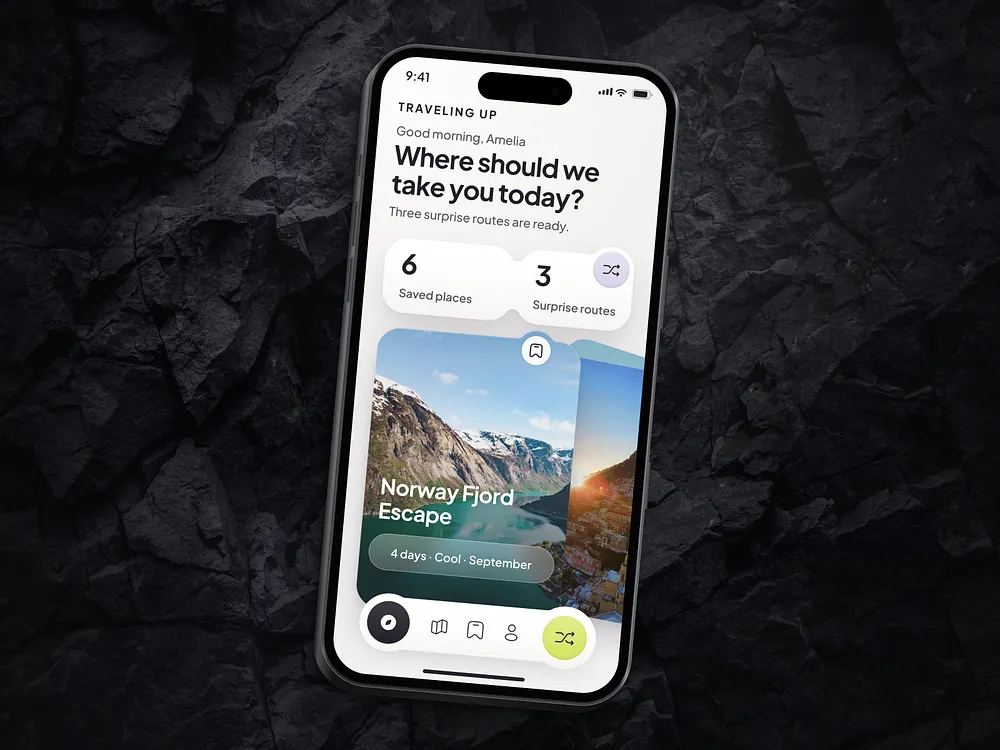
For an illustrative travel product, an entry message promising a ready-to-use itinerary should not lead to an empty search field with no guidance. Investigate that promise-to-result gap before assuming the solution is more destinations or another promotional campaign.
Scale a learning plan before scaling volume
Choose the uncertainty you need to resolve next. If you do not know whether the audience values the core result, recruit enough relevant people to observe that experience. If you understand activation but not renewal, preserve a cohort long enough to observe the recurring value.
Change one major assumption at a time when practical. A new acquisition audience, new onboarding and new pricing launched together may improve results, but they make the cause much harder to interpret.
Set a budget or capacity boundary, a primary outcome and a reason to pause. Small samples can reveal severe comprehension problems; they cannot justify precise long-term revenue claims. The learning plan should match the decision rather than produce an impressive dashboard.
Use a scale, learn or repair decision
Scale when the promised experience works for the intended audience and the economics are sufficiently understood for the next level of investment. Learn when the opportunity looks plausible but a consequential assumption remains unresolved. Repair when a known failure prevents people from receiving the value already promised.
Continue watching support demand, reliability, refunds and useful task completion as volume changes. A product that works for a small group may expose operational constraints when more people arrive.
What evidence says that the next group of users will receive value—and that delivering it will strengthen the business?
No professional ranking or past project count can answer that question for a new app. Experience helps identify the right questions; the product still needs its own evidence. For a stage-by-stage diagnosis, use the mobile app growth funnel guide.